Understanding Your Child with ADHD is a 52-page A4 PDF workbook for parents of children aged 4 to 12. You read, fill in and try one strategy at a time, with scripts to use, a printable routine chart and nine pages to do together with your child. It was written by Marissa, a counsellor, in a gentle, practical and honest voice.
What is it?
A printable and fillable workbook in A4 PDF format, 52 pages long. Print it and write in it with a pen, or fill it in on a tablet with a stylus. It is not meant to be read in one sitting. One strategy at a time is plenty, and you can fill in what is useful, skip what is not, and come back to it.
What does it help you do?
Understand what ADHD is, how it can look in different children, why feelings can run big, and which common ideas are myths
Notice your child’s strengths, patterns and hardest moments
Try 13 practical strategies, from daily special time to routines, transitions, homework, planning for hard moments, and siblings
Use ready-made scripts for what to say, and what not to say, in everyday moments
Plan how to talk with your child about ADHD, and how to work with school
Complete nine pages together with your child, then bring it together in a family plan and a two-week practice tracker
Who is it for?
Parents and carers of children aged 4 to 12 who have ADHD, are waiting for an assessment, or recognise their child in the description
Parents who want practical, plain-language strategies and scripts to try at home
Families who like to write things down, tick them off and keep a plan on the fridge
Adults who want something to share with other caregivers
How does it work?
Seven parts: Understand (pages 3–9), Notice (10–12), Respond (13–32), Support the whole child (33–38), For your child (39–47), Look after you (48–49), and Bring it together (50–52). Most pages pair a short explanation with something to do: fill in, tick, circle, colour or write. It is honest about what helps and what has less evidence, and it does not promise a cure. A low score or a missed day is information, not failure.
What you get
1 digital download (PDF, A4, 52 pages)
Print at home or at a print shop, or fill in on a tablet
Is this therapy? No. It is a self-help and education workbook. It does not replace an assessment, therapy or medical advice, and it cannot diagnose ADHD.
Do I need to print it? No. You can print it on A4 paper or fill it in on a tablet. The routine chart on page 23 is made to be printed, one copy for each routine.
How long does it take? It is designed to be used in small pieces: one strategy at a time, and about ten minutes for the child pages.
Can I use it more than once? You can reprint pages or use a fresh copy.
Is there anything for my child to do? Yes. Part 5 has nine pages to do together, each with a note for the grown-up.
Who made it? Marissa Leufke Nasution, a counsellor, of Marissa’s Practice (@marissaspractice), with a Master’s in Psychology and a Master’s in Counselling.
Important note: This workbook is for personal reflection and education only. It is not a diagnosis, therapy or medical advice, and it does not replace care from a qualified health or mental health professional. If you are struggling, or worried about your child’s safety or wellbeing, please reach out to your doctor, a counsellor or another qualified professional. In an emergency, contact your local emergency services.

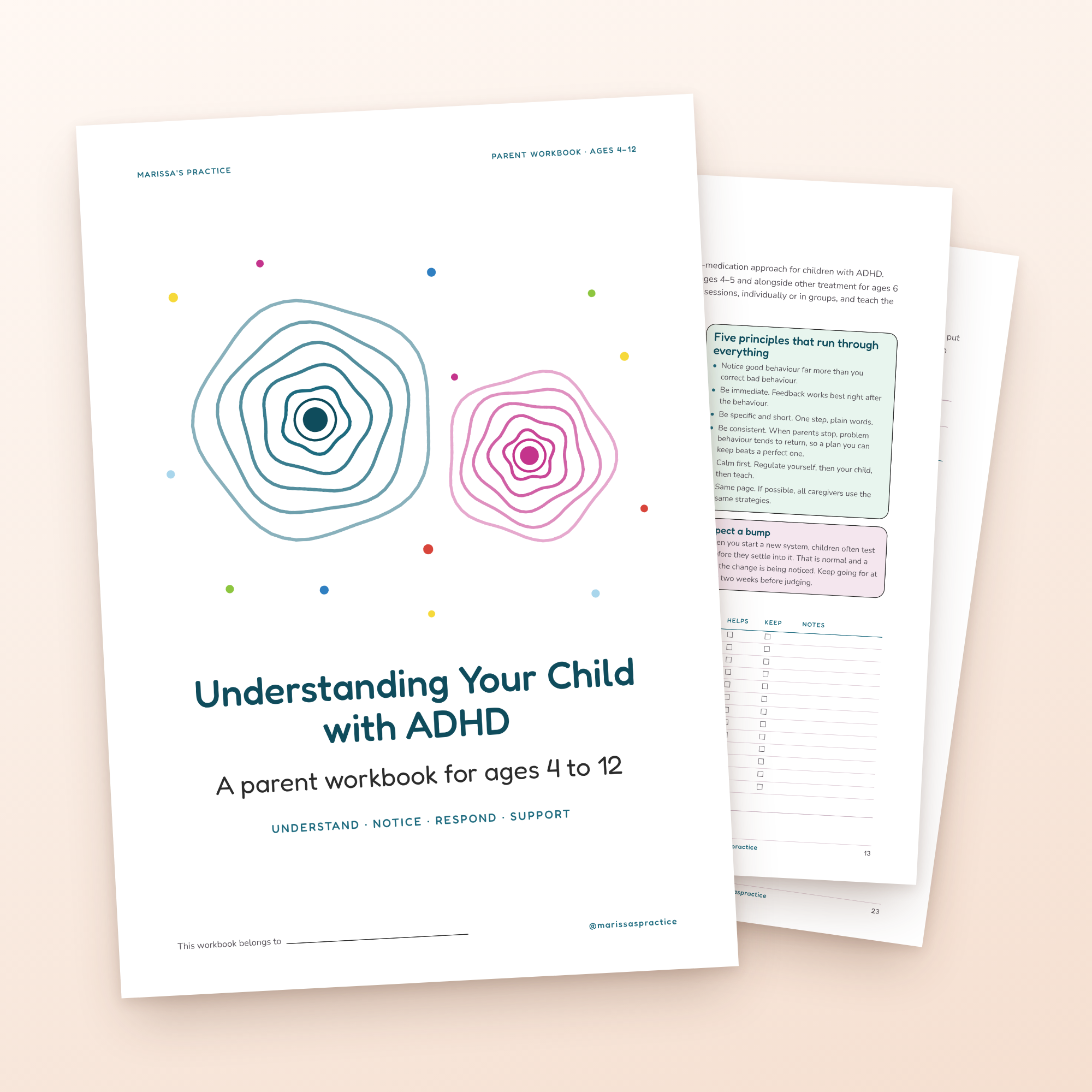 Image 1 of 9
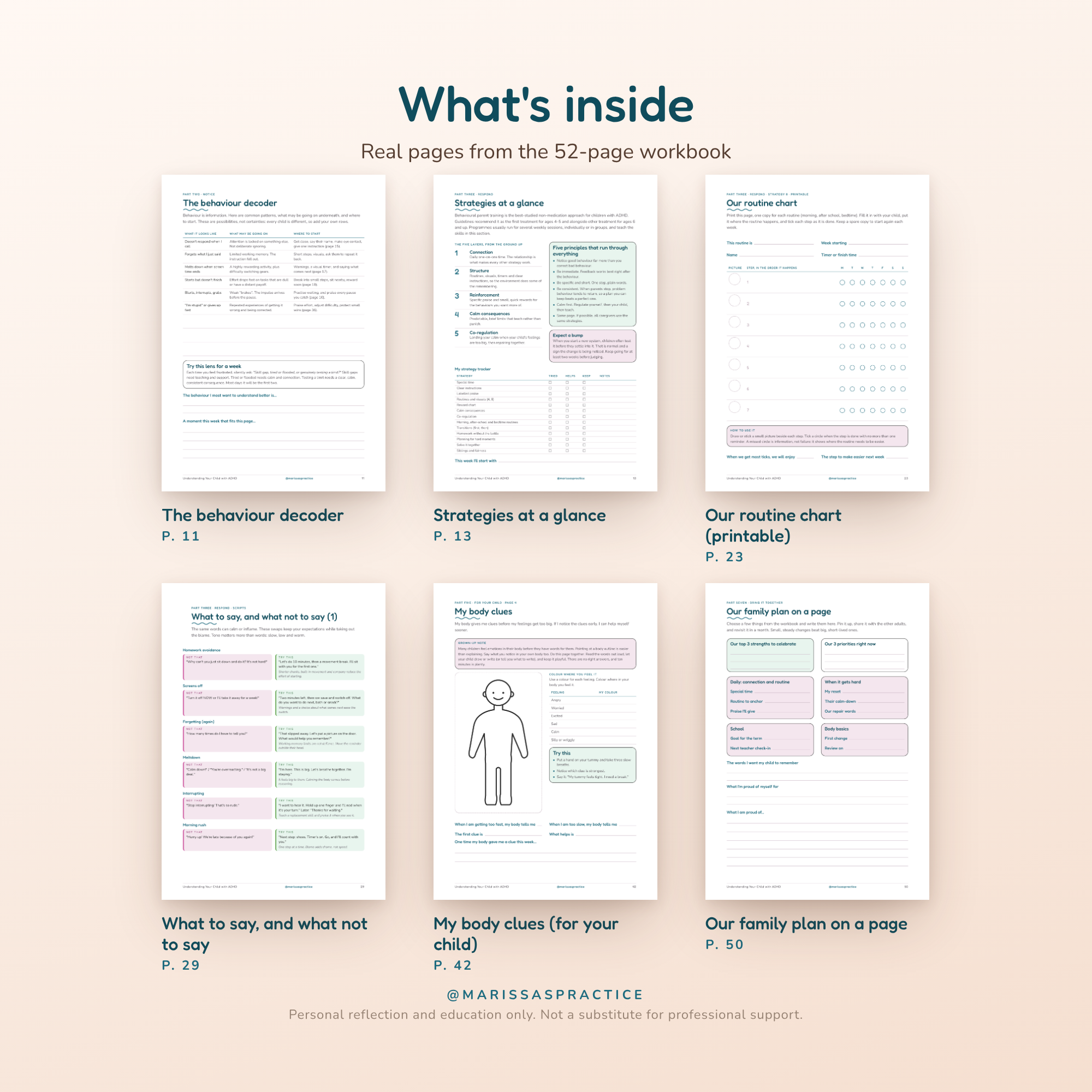 Image 2 of 9
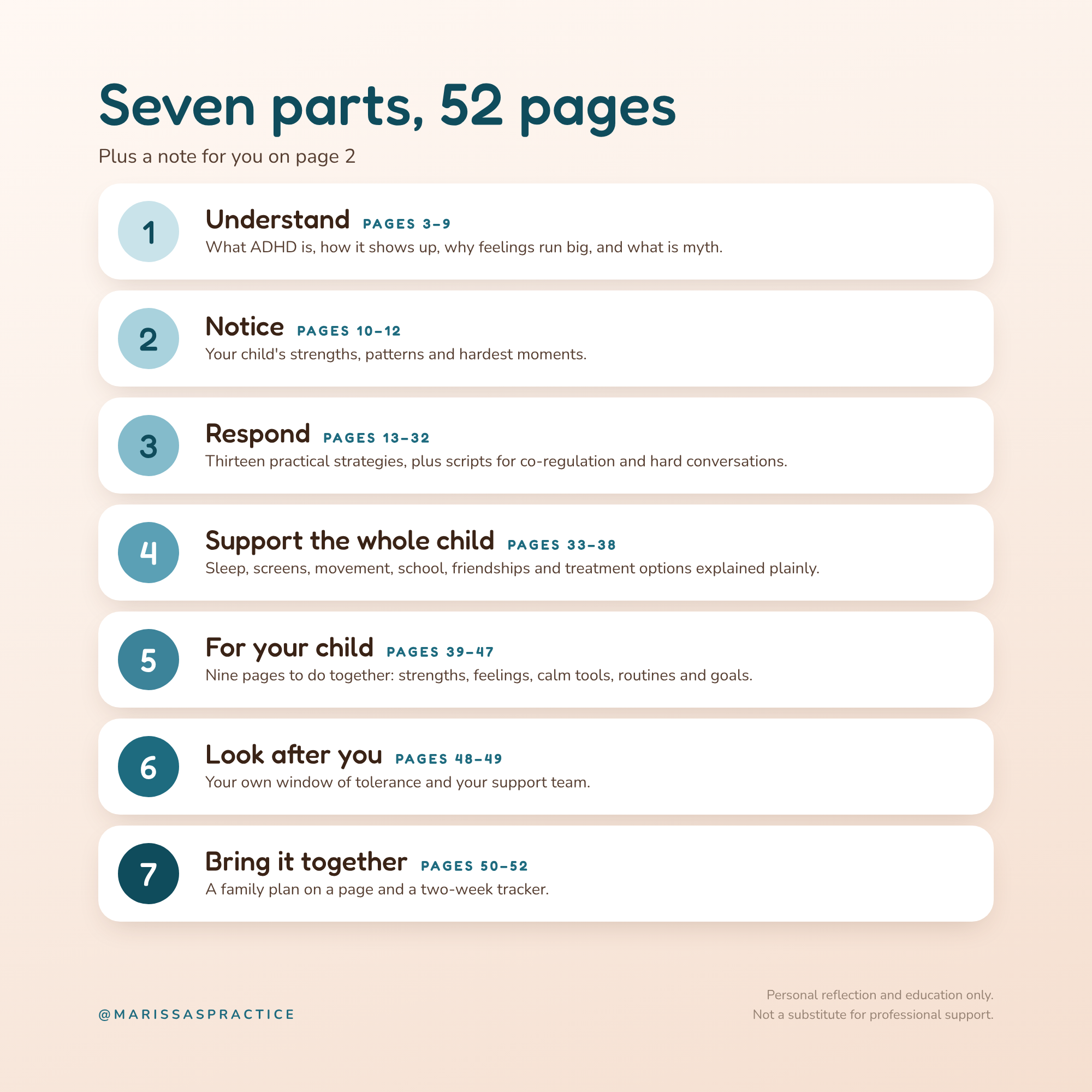 Image 3 of 9
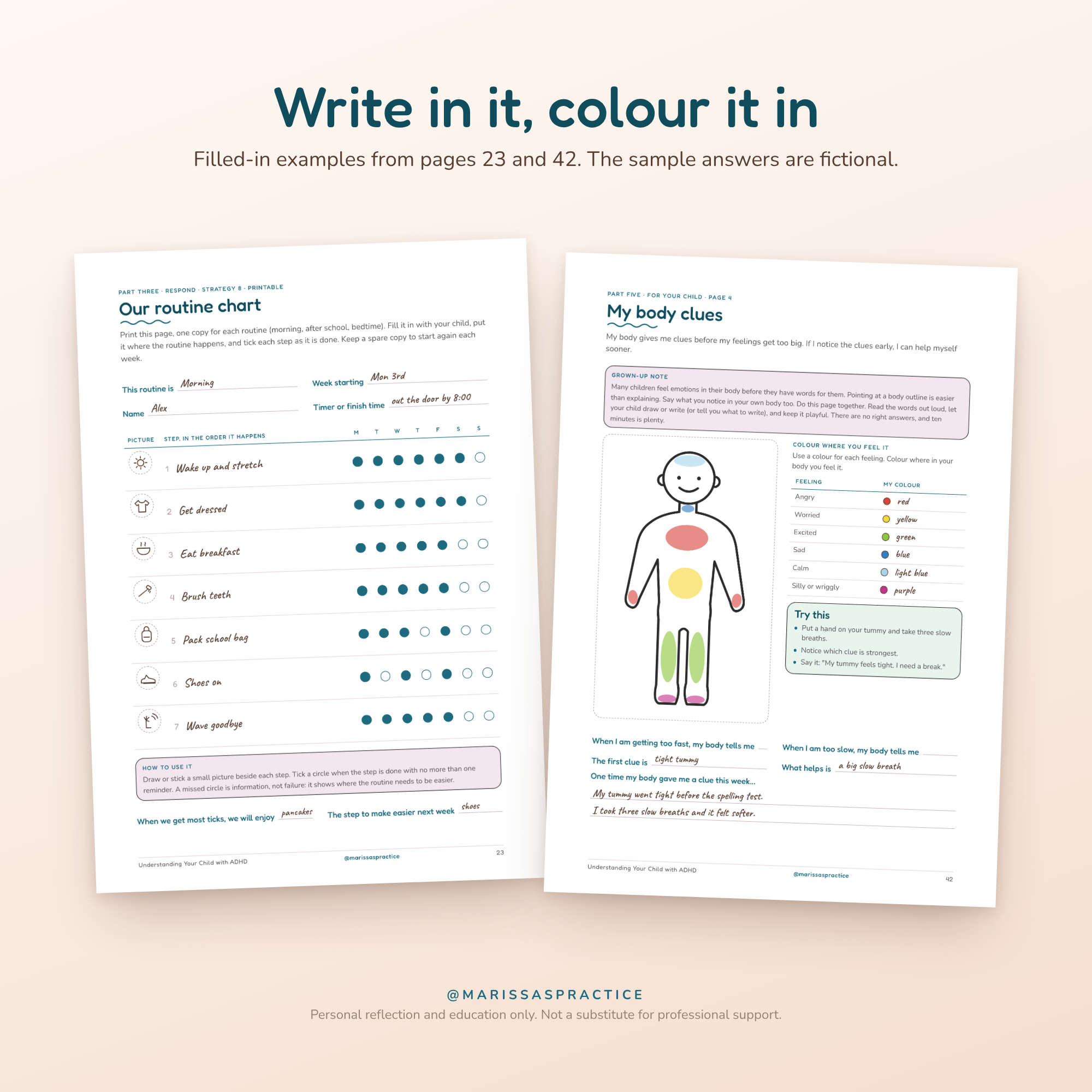 Image 4 of 9
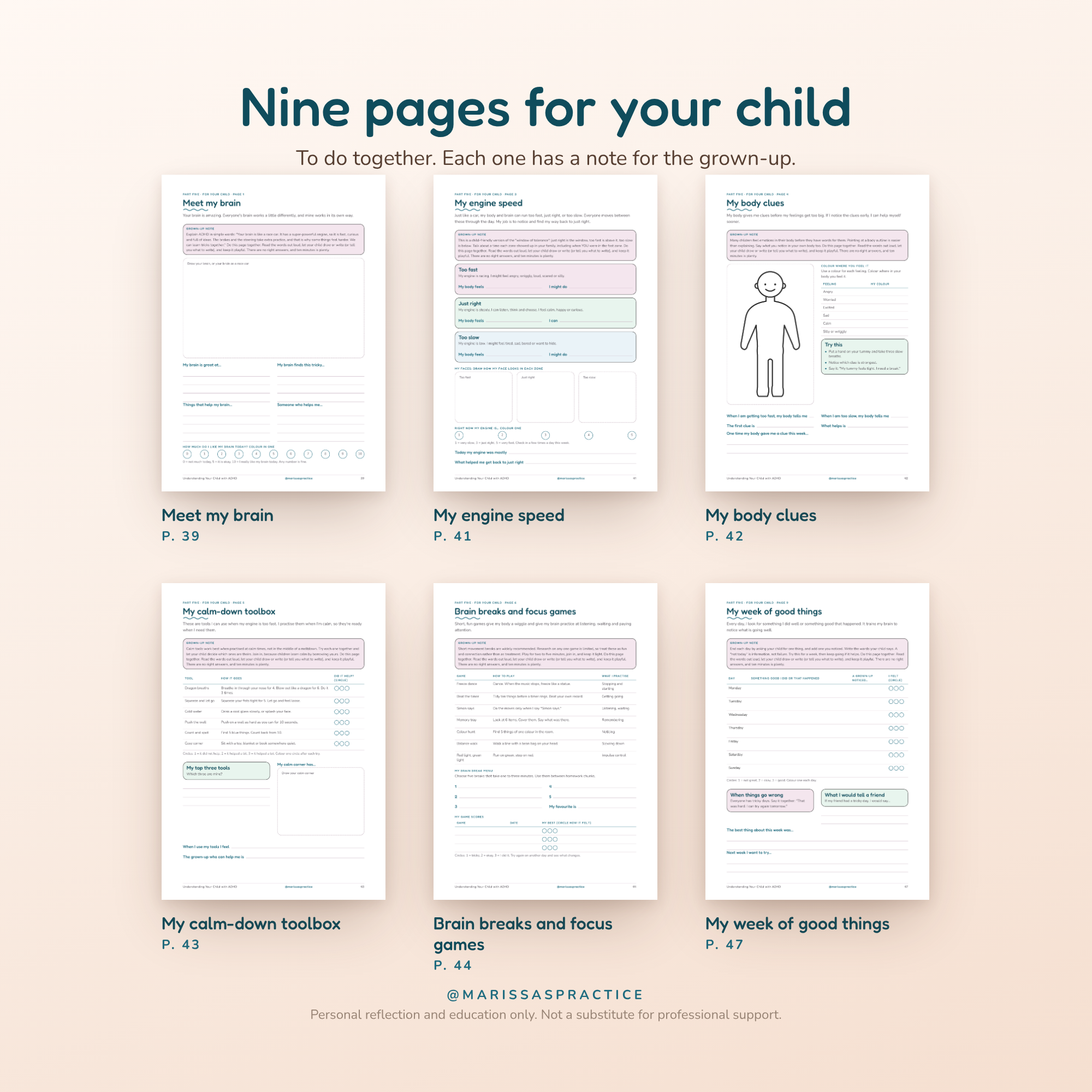 Image 5 of 9
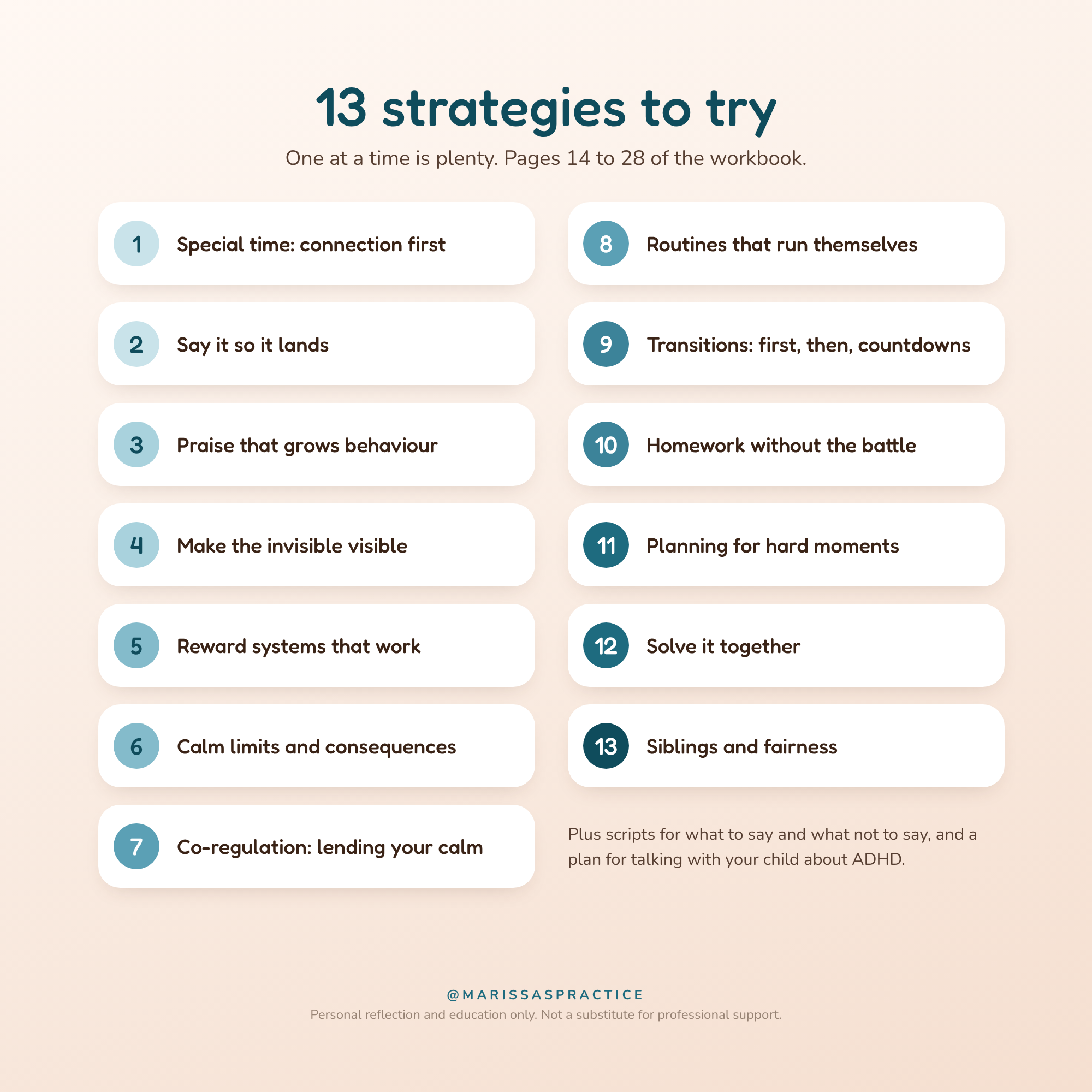 Image 6 of 9
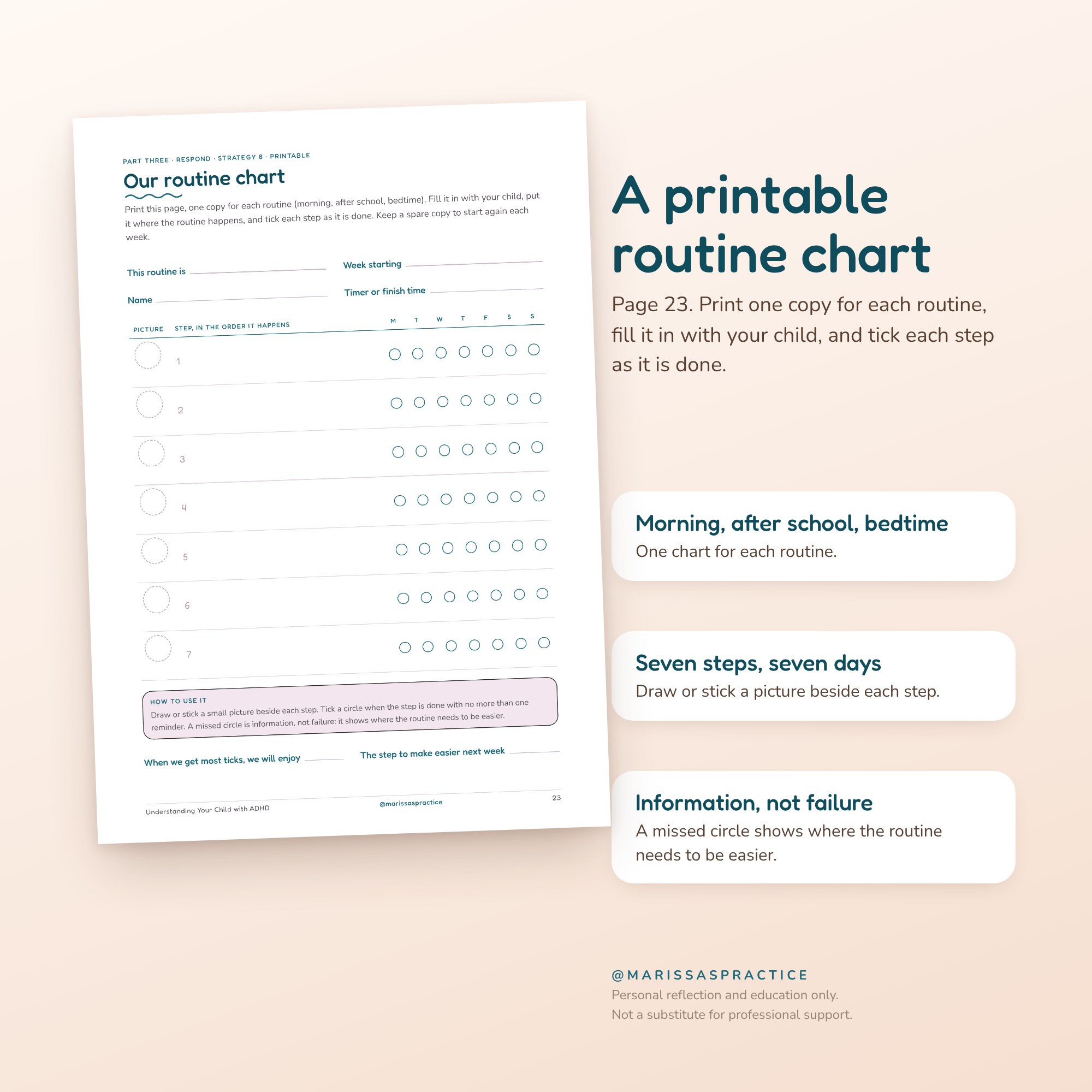 Image 7 of 9
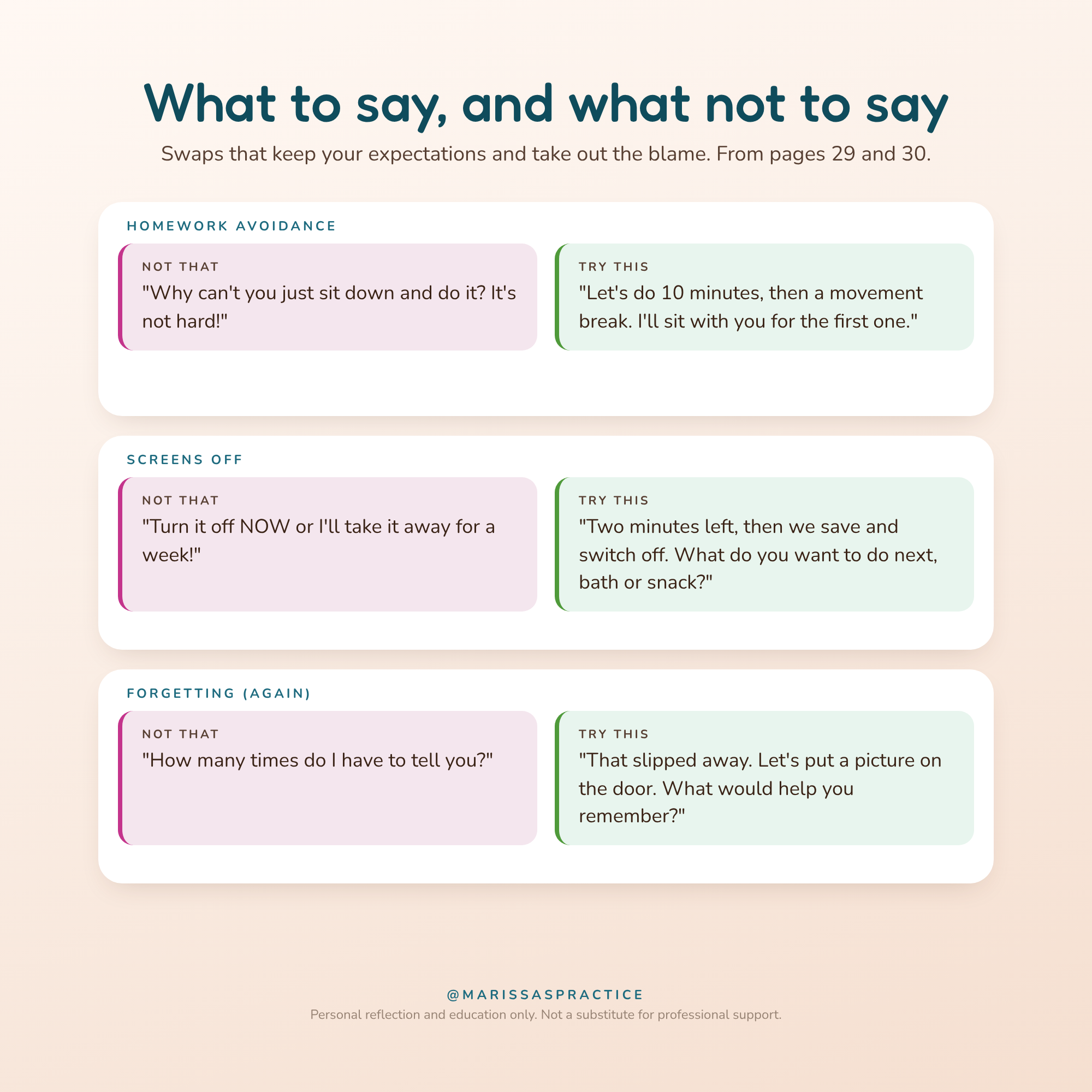 Image 8 of 9
 Image 9 of 9