Focus Flow is a 50-page A4 PDF workbook for teens aged 12 to 18 with ADHD, or who think they might have it. You read, fill in and try small strategies for focus, studying and exams, then build your own one-page plan. It was written by Marissa, a counsellor, in a gentle, practical and honest voice.
What is it?
Focus Flow: An ADHD guide for teens is a printable and fillable workbook in A4 PDF format, 50 pages long. Print it and write in it with a pen, or fill it in on a tablet with a stylus. It is not a one-sitting read. The guide suggests about ten minutes a day, and you can start on whichever page you need most: the contents page includes a "Where to start" box (struggling to start work, exams in the next month, everything feels like too much, or wanting to understand why).
What does it help you do?
Understand what ADHD is, how it can show up in teens, and what executive function means
Map your own "window of tolerance" and spot what each zone feels like in your body and thoughts
Try 14 focus strategies, from the two-minute start to work blocks, phone and space set-ups, the Sunday reset, sleep and a bounce-back plan
Build a study routine with 12 exam strategies, including quizzing yourself, a step-by-step 45-minute study session, timetables, exam week and the exam room
Break big tasks into a ladder of small steps, each with a time and a day
Plan how to talk to teachers and who to ask for help
Pull it together into a plan on a page, a two-week habit tracker and a monthly review
Who is it for?
Teens aged 12 to 18 who have ADHD, are waiting for an assessment, or recognise themselves in the description
Teens who want practical study and exam strategies that suit a busy, easily distracted brain
Parents, carers and teachers who want a gentle, structured resource to offer a teen (there is also a page written for the adults who care about them)
How does it work?
The workbook has five parts, plus a cover, a welcome note and a contents page (pages 1 to 3), and a closing page (page 50).
Understand (pages 4 to 13): what ADHD is, three presentations, executive function, the window of tolerance (four pages, with a window you can draw your day on), ADHD and other things that often travel with it, myths and facts, strengths and hardest moments
Focus (pages 14 to 27): 14 strategies, each with what it is, step-by-step instructions, what to do when it goes wrong, and space to make it yours
Exam preparation (pages 28 to 40): 12 strategies, with a worked-example page, covering the countdown, study methods, quizzing, notes, timetables, study partners, exam week, the exam room, test anxiety and review
Getting support (pages 41 to 46): talking to teachers, the support options explained honestly, questions about medication, staying safe and well, a page for the adults who care about you, and a support team page
My plan (pages 47 to 49): a plan on a page, a two-week habit tracker and a monthly review
Strategy pages carry an evidence tag so you can see how well supported an idea is, and the sources are listed on the last page. A low score on any scale is information, not failure.
What you get
1 digital download: Focus Flow: An ADHD guide for teens (PDF, A4, 50 pages)
Print at home or at a print shop, or fill in on a tablet
Frequently asked questions
Is this therapy? No. Focus Flow is a self-help and education workbook. It does not replace therapy, an assessment or medical advice, and it cannot diagnose ADHD. You do not need a diagnosis to use it, and only a qualified clinician can diagnose ADHD or advise on treatment.
Do I need to print it? No. You can print it (A4) or fill it in on a tablet with a PDF annotation app and a stylus.
How long does it take? It is designed to be used in small pieces. The guide suggests about ten minutes a day, and you can start with the page you need most rather than reading from page 1.
Can I use it more than once? Yes. Some pages are made to be repeated, such as the two-week habit tracker and the monthly review, so you can start again whenever you like.
Does it only cover exams? No. Part two is about everyday focus (starting, distractions, sleep, movement, feelings), part three is about studying and exams, and parts one, four and five cover understanding ADHD, getting support and making a plan.
Who made it? Marissa Leufke Nasution, a counsellor, of Marissa's Practice (@marissaspractice). She holds a Master's in Psychology and a Master's in Counselling and is the founder of Feelosophy, a children's emotional wellness brand.
Important note
Focus Flow is for personal reflection and education only. It is not a diagnosis, treatment, or a substitute for professional medical, psychological or educational advice. If you are struggling, please reach out to a doctor, counsellor or other qualified professional. In an emergency, contact your local emergency services.

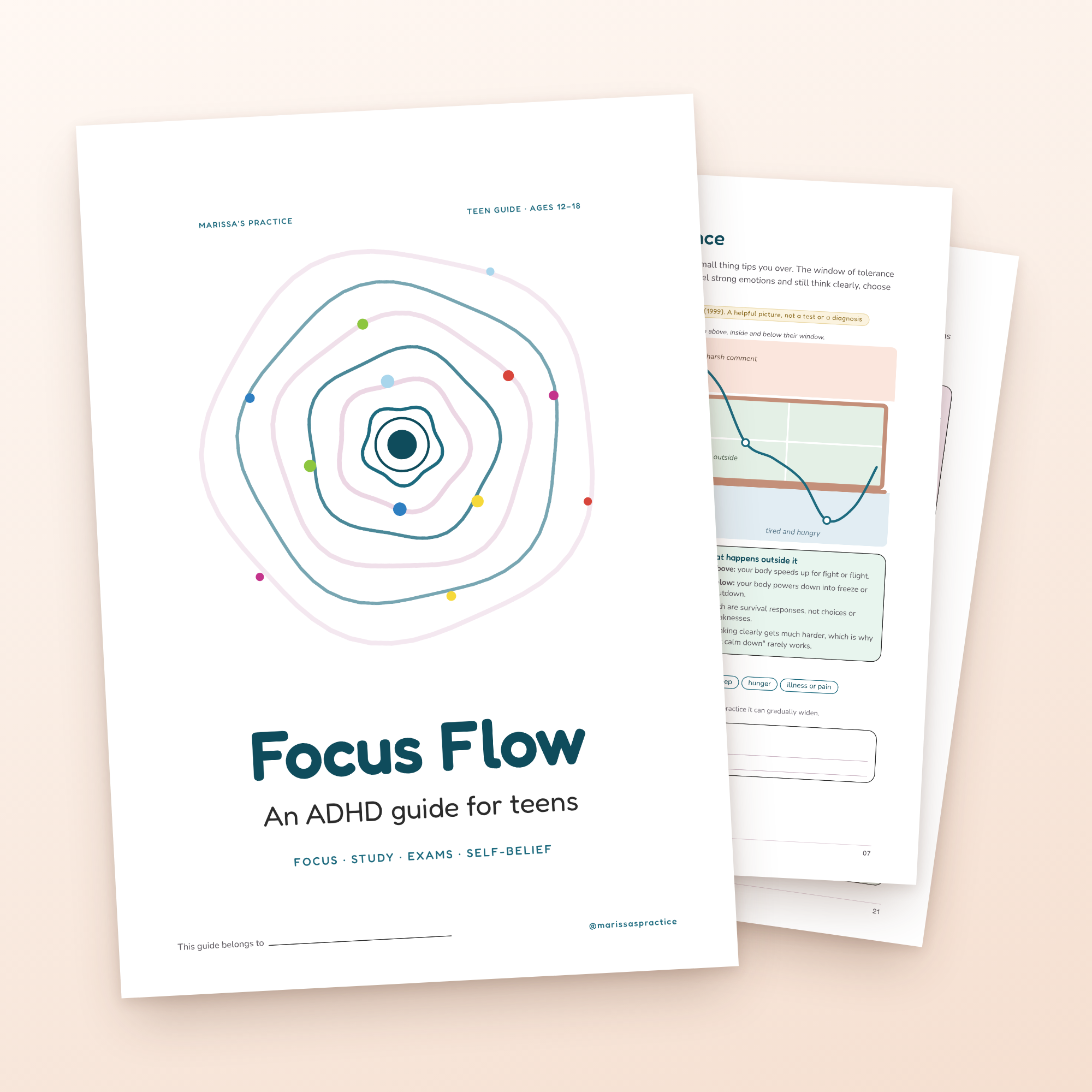 Image 1 of 7
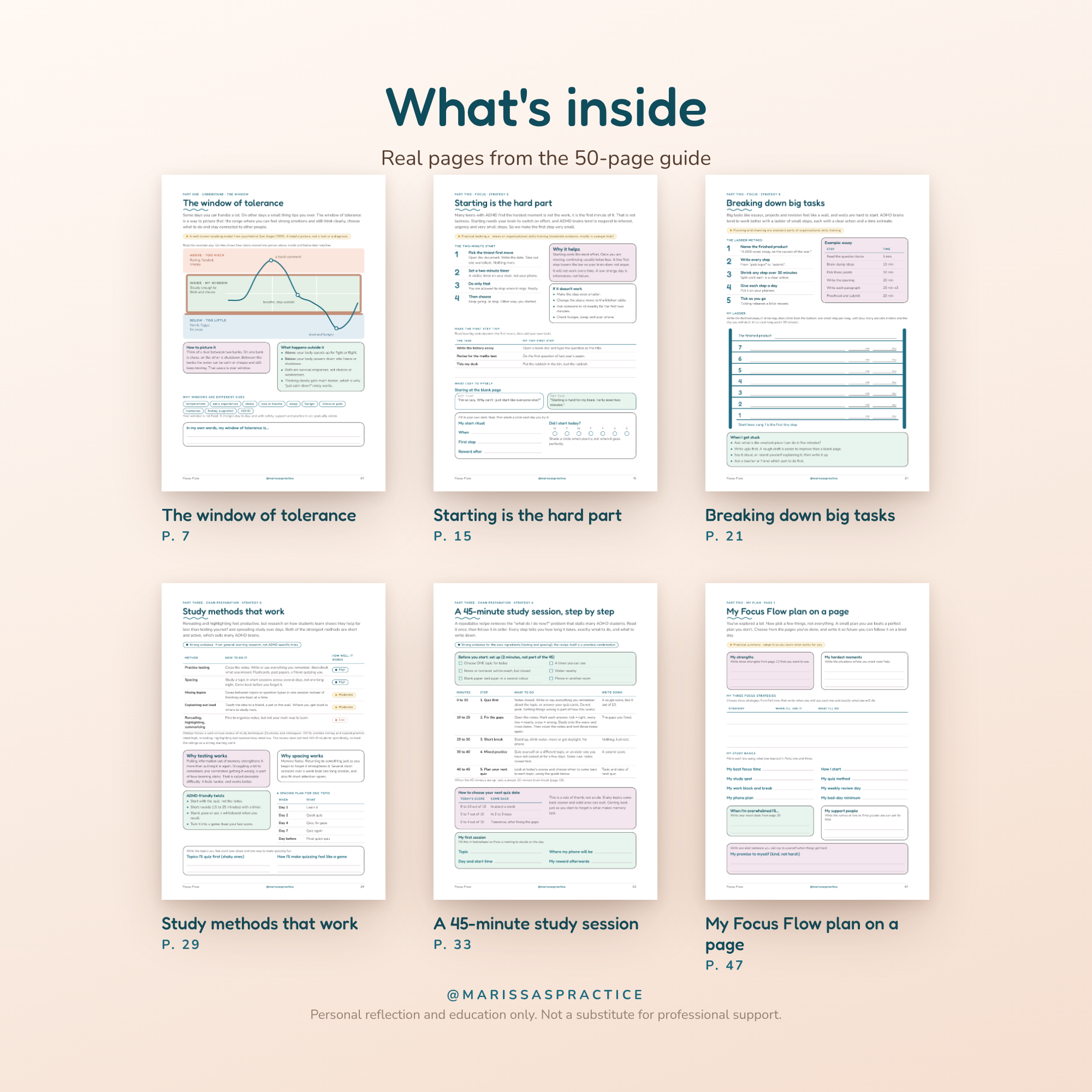 Image 2 of 7
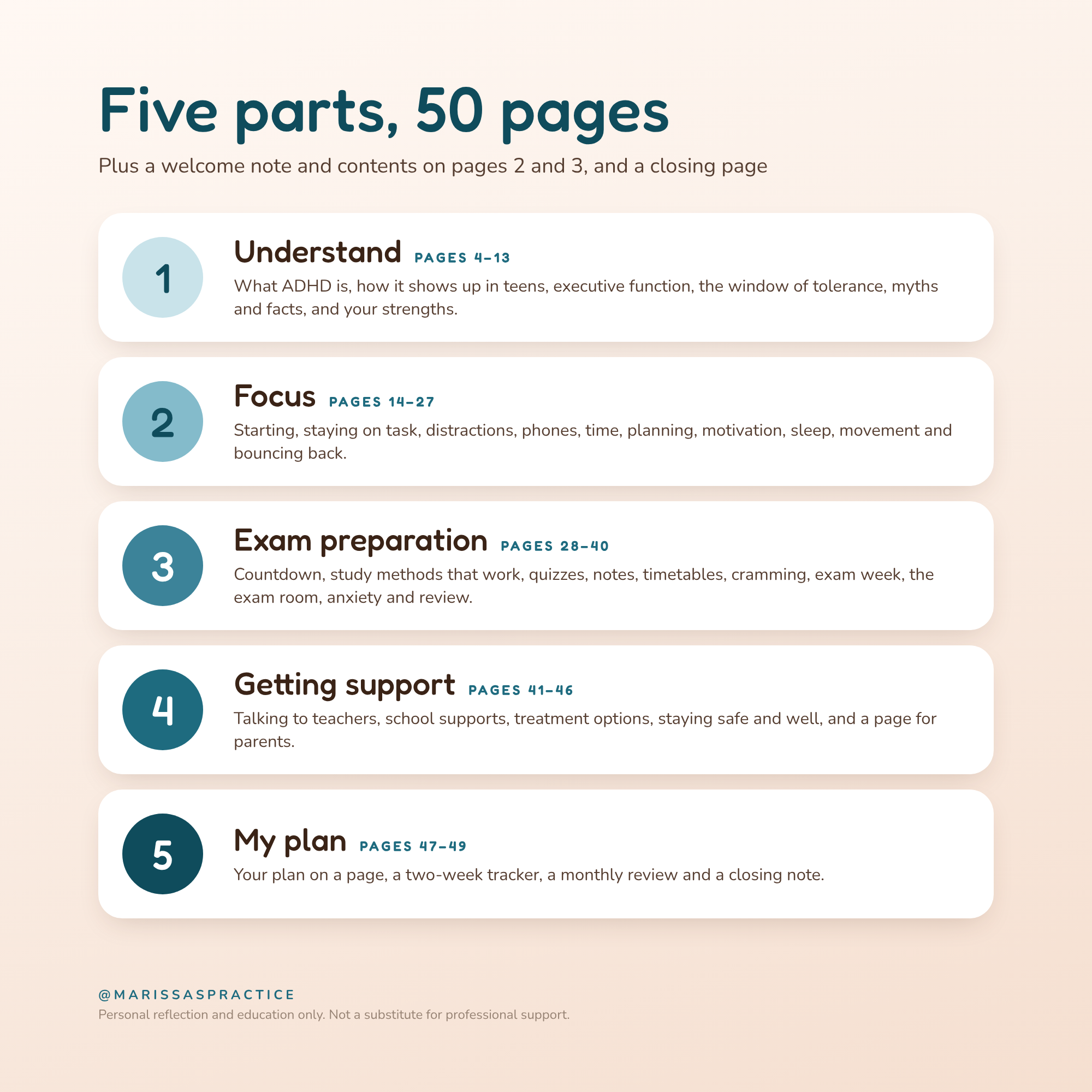 Image 3 of 7
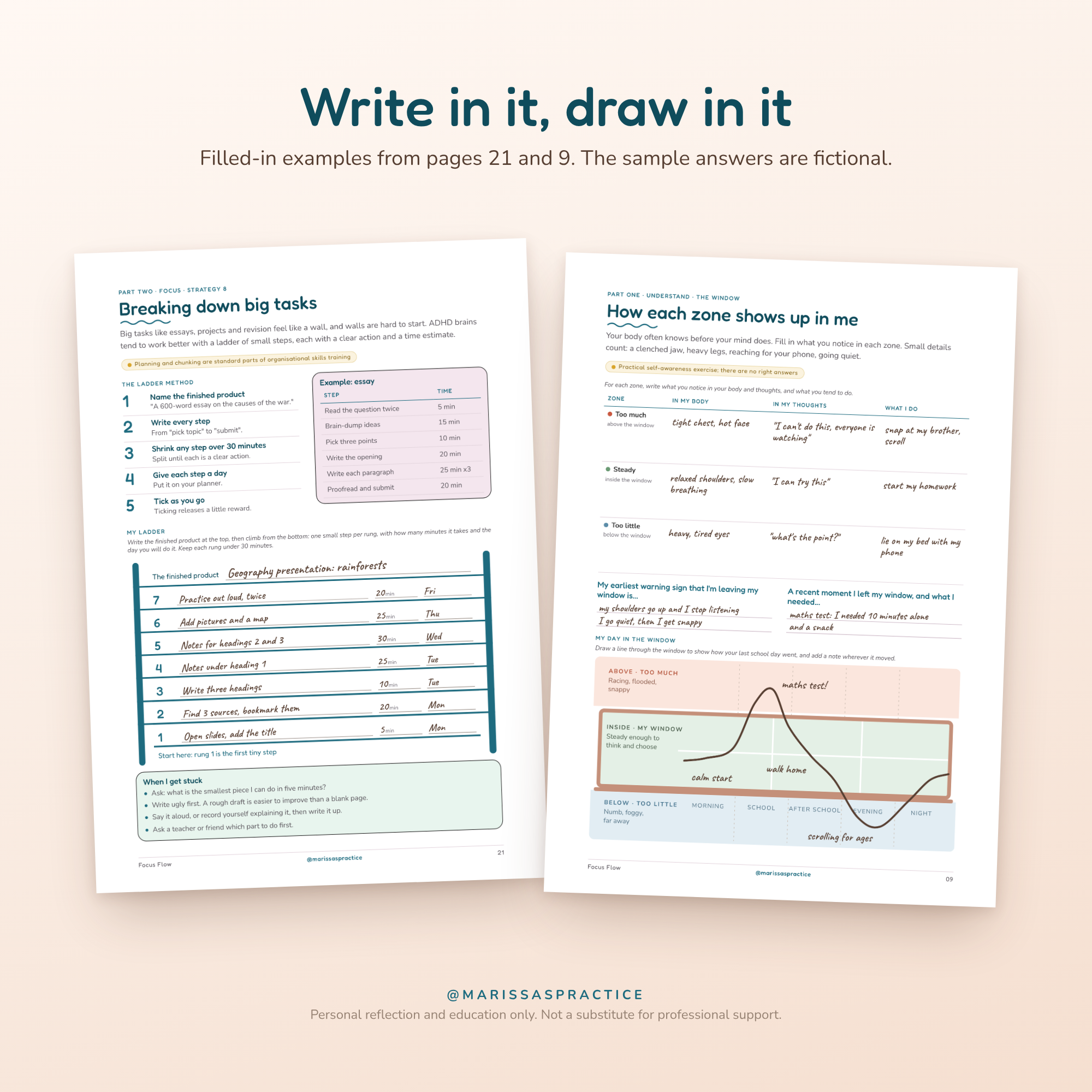 Image 4 of 7
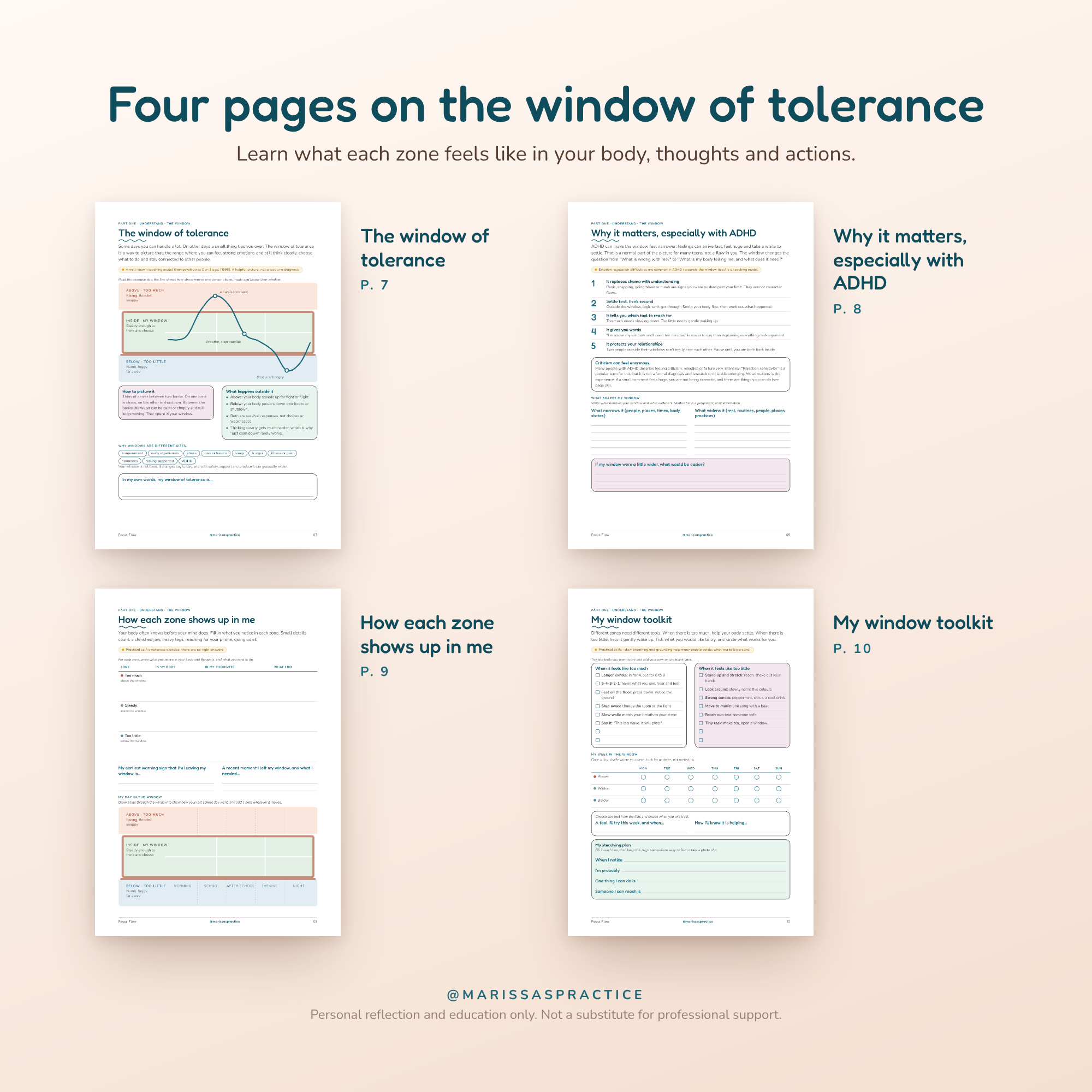 Image 5 of 7
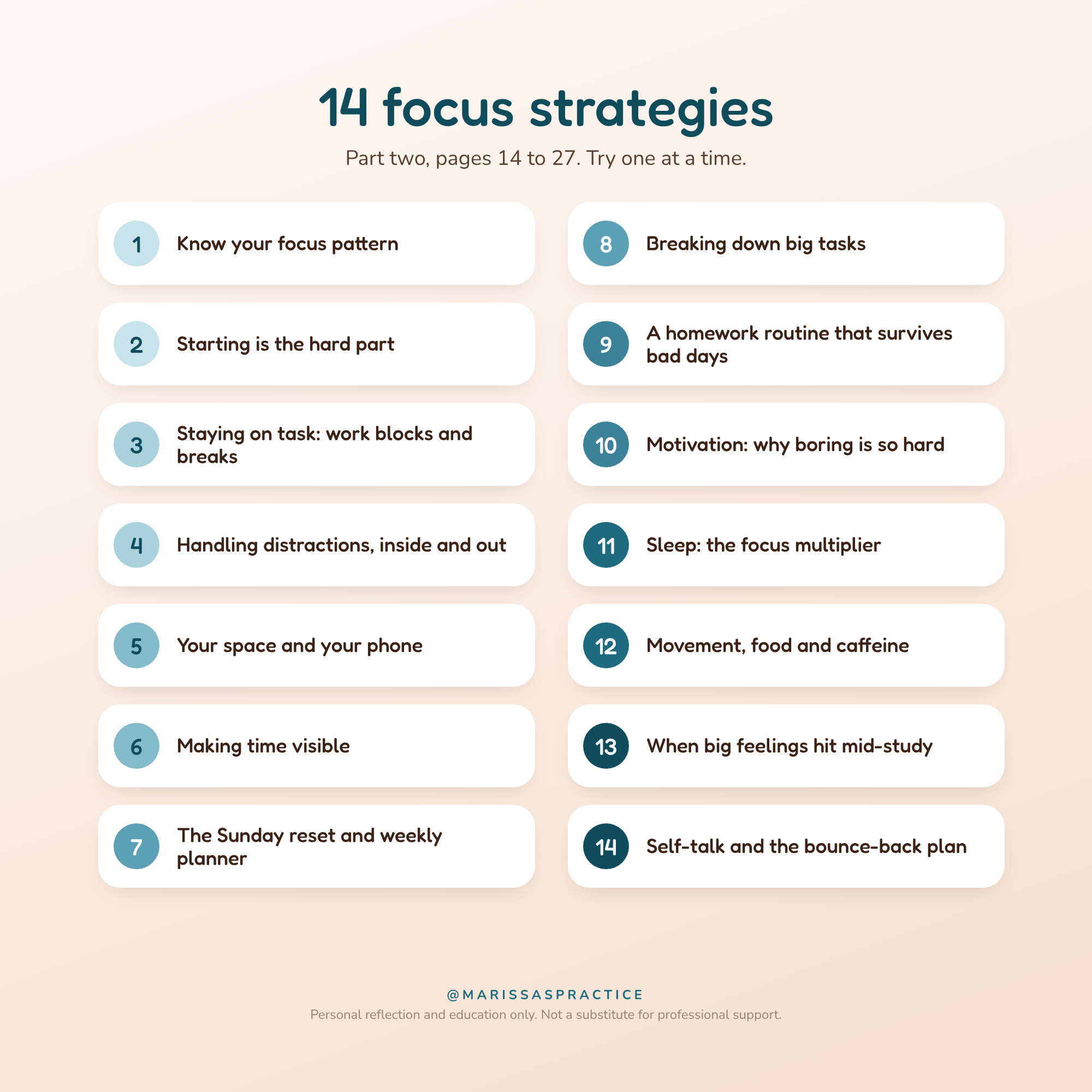 Image 6 of 7
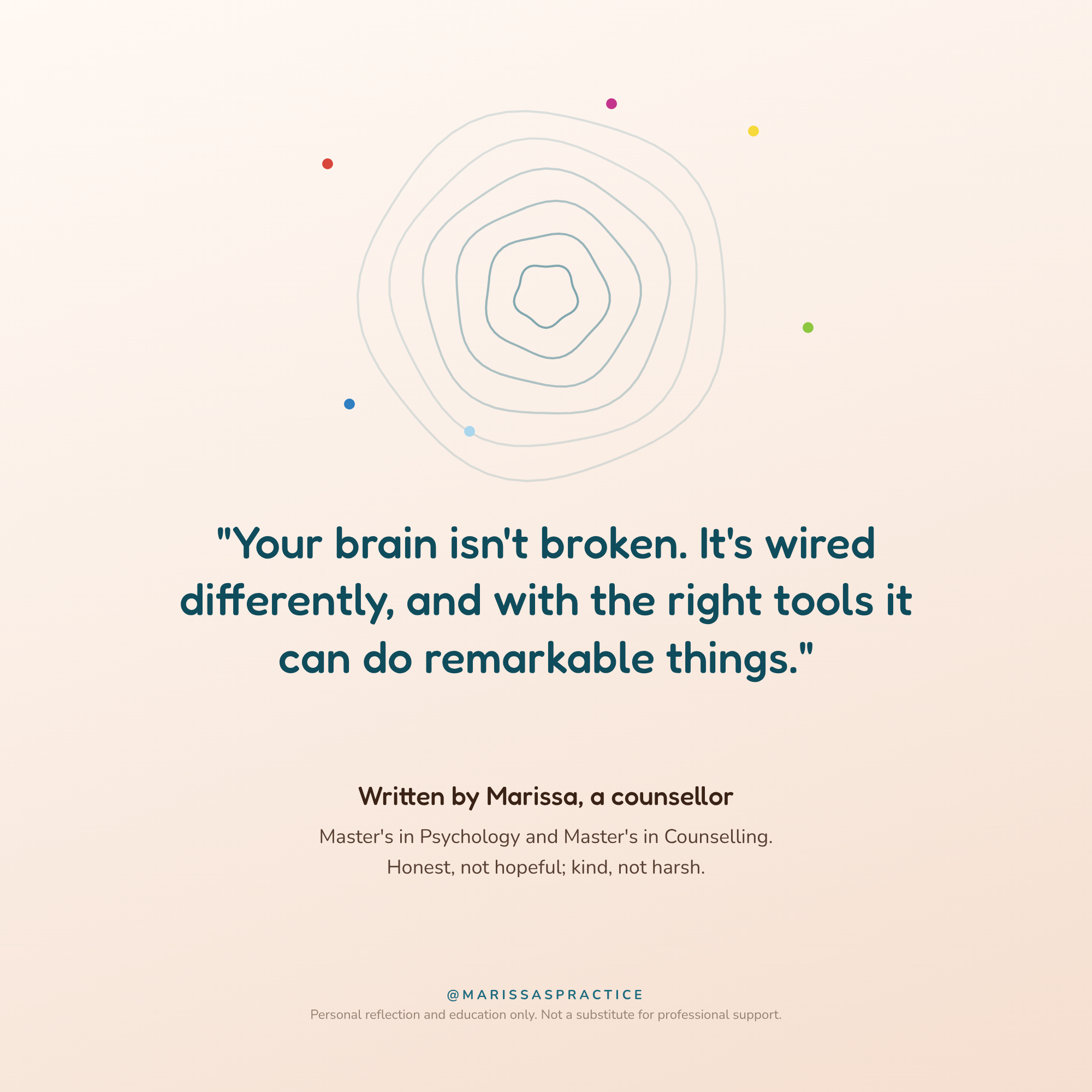 Image 7 of 7